Planet Zoo 2 vs Planet Zoo 1: what actually changed
Three new systems, a bigger roster and a much steeper hardware requirement — the real differences.
What Planet Zoo 2 adds over the first game
| System | Planet Zoo (2019) | Planet Zoo 2 (2026) |
|---|---|---|
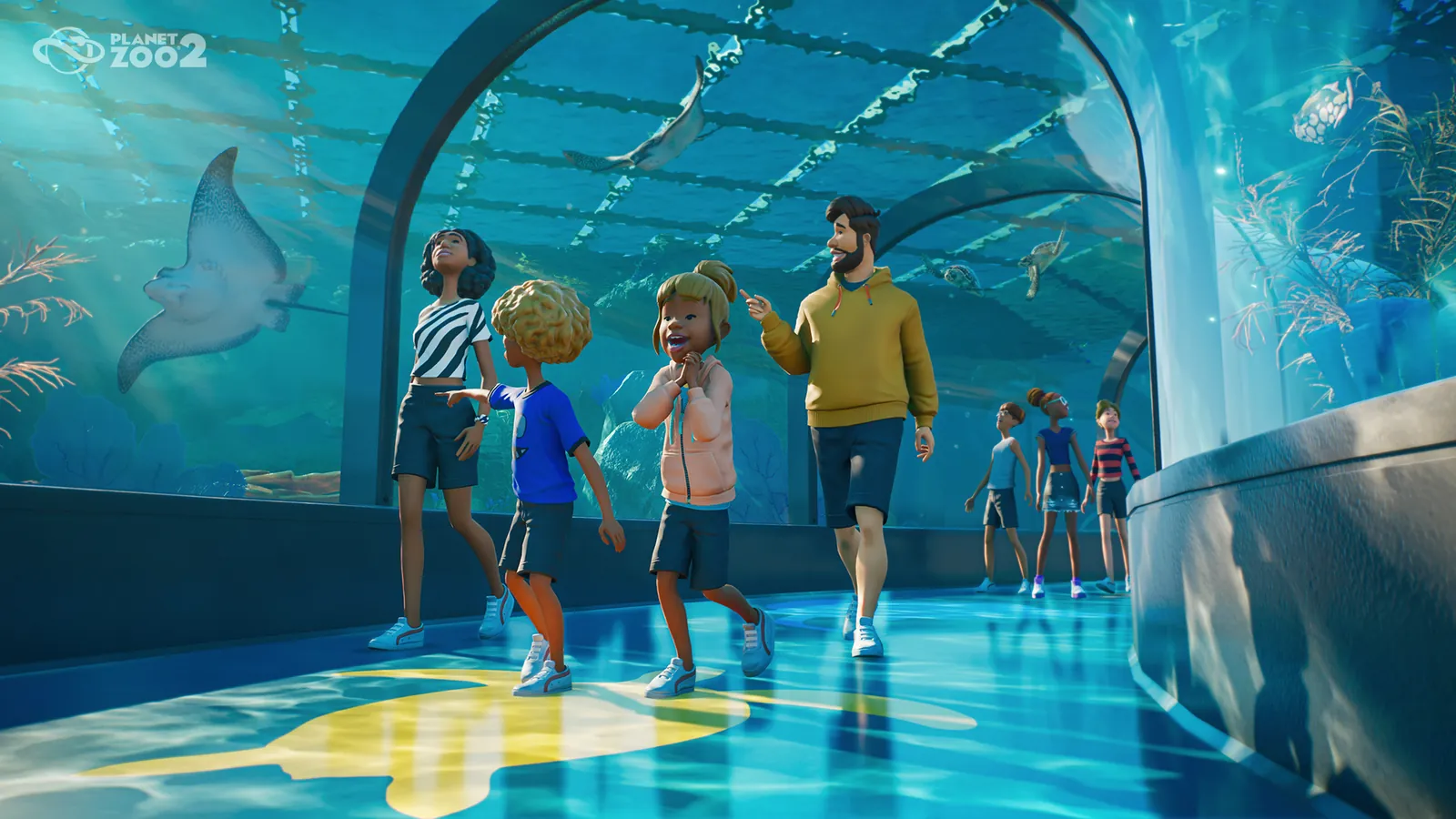
| Fully aquatic species | No — aquatic animals used standard habitats | Yes, with freshwater and saltwater aquariums |
| Flying birds | No — birds were ground-based or in exhibits | Yes, with buildable aviaries |
| Wildlife Reserves | No | Yes — separate large maps |
| Conservation projects | Yes | Yes, extended into Reserves |
| Animal simulation | Individual needs and welfare | Herding, grazing, flight and swimming |
| Modes | Career, Franchise, Challenge, Sandbox | Career, Franchise, Sandbox |
| Workshop | Yes | Yes (Frontier Workshop, share codes) |
Check before switching: Frontier lists three modes for Planet Zoo 2 (Career, Franchise,
Sandbox). The original also had a separate Challenge mode. If that mattered to you, confirm its status — it is
not in the official mode list.
Is the sequel a straight upgrade?
On paper, yes: everything the first game did, plus three new systems and a bigger roster. In practice the sequel also raised the hardware bar. The first game ran comfortably on 2019 mid-range hardware; the sequel asks for an RTX 2060 and 16 GB of RAM. If your PC ran Planet Zoo 1 well, that does not automatically mean it runs the sequel well.
What changes in how you play
Building tools and the Franchise loop feel familiar. What changes is planning: aquariums and aviaries need their own layouts, and Reserves are a second kind of map rather than an extension of your zoo. Players who enjoyed the first game's conservation layer get the most new content.
Advertisement